

How Many Teeth Do Dogs Have? 5 Essential Dental Care Secrets
As a dedicated dog owner, you probably inspect your pup’s paws, coat, and ears regularly, but how often do you look closely at their smile? A common question many pet owners ask is: how many teeth do dogs have? Understanding your dog’s dental anatomy is a fundamental part of maintaining their overall health. Just like human beings, dogs grow two distinct sets of teeth during their lifetime, starting with sharp puppy teeth that eventually transition into strong adult teeth.
In this comprehensive guide, we will answer exactly how many teeth do dogs have, explore the different types of canine teeth and their functions, outline the teething timeline, and share professional canine dental care tips to keep your dog’s mouth clean and pain-free.
Table of Contents
- How Many Teeth Do Dogs Have? 5 Essential Dental Care Secrets
- Puppy Teeth vs Adult Dog Teeth Counts
- The deciduous puppy teeth timeline
- The permanent adult dog teeth anatomy
- Anatomy of a Dog’s Mouth
- Understanding incisors, canines, premolars, and molars
- Canine Dental Care Tips for Healthy Teeth
- Brushing your dog’s teeth at home safely
- Professional veterinary dental cleanings
- Canine Dental Development Comparison Table
- Common Myths About Dog Teeth
- FAQ Accordion
Puppy Teeth vs Adult Dog Teeth Counts
Just like human children, puppies are born without any visible teeth. Their first set of baby teeth emerges in the early weeks of life, only to be replaced by their adult set as they mature.
The deciduous puppy teeth timeline
Puppies develop their first set of teeth, technically known as deciduous or needle teeth, starting at around three to four weeks of age. A normal, healthy puppy will grow a total of twenty-eight deciduous teeth. These baby teeth lack molars, consisting only of incisors, canines, and premolars. By the time a puppy reaches six to eight weeks of age, their temporary set of teeth is completely developed. This set is highly sharp, which helps them transition from nursing to eating solid kibble.
The permanent adult dog teeth anatomy
To understand how many teeth do dogs have at different ages, consider that as puppies grow, their deciduous teeth begin to shed to make room for their permanent adult teeth. This teething phase typically starts around the twelfth to sixteenth week of life. By the time a dog reaches seven to eight months of age, all their permanent teeth should be fully erupted. An adult dog possesses a total of forty-two permanent teeth, which is significantly more than the thirty-two adult teeth found in humans. This complete set includes twelve incisors, four canine teeth, sixteen premolars, and ten molars.
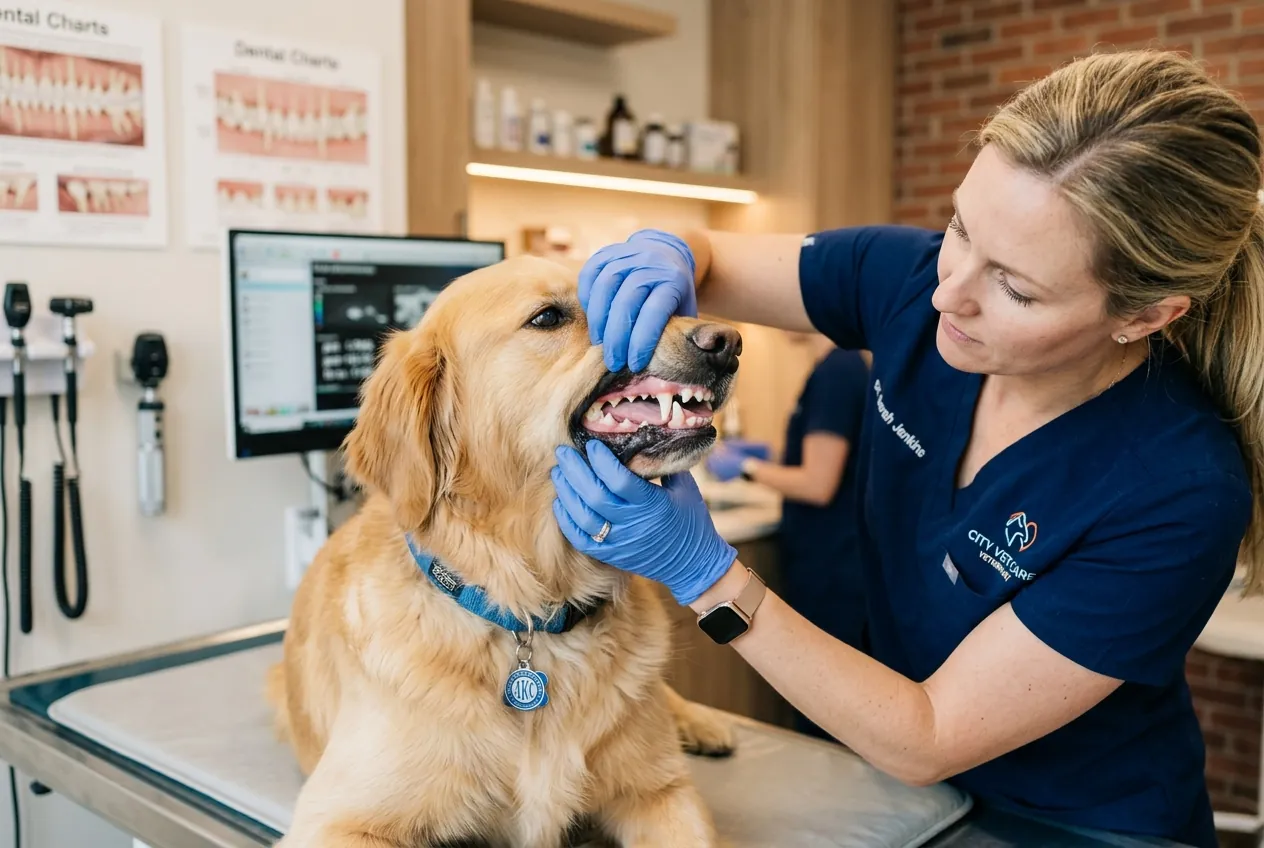
A veterinarian gently checking a dog’s teeth and gums during a checkup.
Anatomy of a Dog’s Mouth
Every type of tooth in a dog’s mouth is designed for a specific survival purpose, from grasping food to shearing meat and crushing bone.
Understanding incisors, canines, premolars, and molars
When researching how many teeth do dogs have, it helps to know that a dog’s adult teeth are divided into four distinct categories, each playing a unique role in their digestive process:
- Incisors: These are the small teeth located at the front of the mouth. Dogs have six on the top and six on the bottom, used for nibbling food, grooming their coats, and scraping small bits.
- Canines: These are the long, pointed teeth situated on the sides of the mouth. Dogs have four canines (two top, two bottom) used for puncturing, tearing, and holding objects securely.
- Premolars: Located behind the canines, these teeth are designed for shearing food. Adult dogs have sixteen premolars divided equally between the upper and lower jaws.
- Molars: These are the flat, heavy teeth at the back of the mouth. Dogs have ten molars (four on top, six on bottom) used for grinding, crushing, and breaking down hard kibble or bones.
Canine Dental Care Tips for Healthy Teeth
Maintaining proper dental health is a vital part of your dog’s preventative care. According to research on AVMA Pet Dental Care, periodontal disease is the most common clinical condition diagnosed in adult dogs, often starting by the age of three.
Brushing your dog’s teeth at home safely
The most effective way to prevent plaque and tartar buildup is by brushing your dog’s teeth daily. Always use a soft-bristled toothbrush designed for dogs and a pet-safe toothpaste. Never use human toothpaste, as it contains ingredients like xylitol or fluoride that are highly toxic to dogs. If your pup is anxious or resistant to dental handling, you must build their trust slowly with positive rewards. Having a well-trained dog makes home dental care much easier. You can refer to our guide on Dog Trainers for Resource Guarding to learn positive handling and cooperative care techniques. Check About Us to read more about our commitment to positive canine behavior.
Professional veterinary dental cleanings
While home brushing is essential, it cannot remove hardened tartar that builds up beneath the gumline. Your veterinarian should perform a thorough oral exam during your dog’s annual wellness checks. If tartar buildup is severe, they will recommend a professional dental scaling and polishing under anesthesia. Anesthesia is necessary to ensure the vet can safely clean deep under the gums and take dental X-rays to check for bone loss.
Canine Dental Development Comparison Table
The table below summarizes the differences in dental development between puppies and adult dogs.
| Dental Stage | Total Teeth Count | Types of Teeth Present | Teething Period | Common Behaviors |
|---|---|---|---|---|
| :— | :— | :— | :— | :— |
| Puppy (Deciduous) | 28 teeth | Incisors, Canines, Premolars | 3 weeks to 8 weeks | Chewing, exploring items, mouthing hands |
| Adult (Permanent) | 42 teeth | Incisors, Canines, Premolars, Molars | 4 months to 8 months | Increased chewing intensity, losing baby teeth |
Common Myths About Dog Teeth
Let’s address some frequent misconceptions regarding canine dental health and anatomy.
- Myth: Dogs mouths are cleaner than human mouths.
- Fact: A dog’s mouth contains hundreds of species of bacteria, similar to humans. While dog saliva has some mild antibacterial properties, it is not sterile, and bites can easily cause infection. Check the Wikipedia article on Dogs to learn about canine biology.
- Myth: Hard kibble alone keeps a dog’s teeth clean.
- Fact: Most kibble kibbles crumble instantly upon contact with teeth, offering very little abrasive cleaning action. Brushing and dental chews are far more effective.
- Myth: Bad breath in dogs is completely normal.
- Fact: Persistent foul breath, or halitosis, is a primary indicator of periodontal disease or dental infections. It should always be evaluated by a veterinarian.
FAQ Accordion
Do dogs lose their baby teeth like humans do?
Yes, puppies lose their deciduous teeth to make room for their permanent adult teeth. This process occurs during the teething phase, which typically runs from twelve weeks to eight months of age.
Why does my adult dog have more teeth than me?
Adult dogs have forty-two teeth, whereas adult humans have thirty-two. Dogs require more teeth because their ancestors relied on specialized teeth for catching prey, tearing meat, and crushing bones in the wild.
What should I do if a puppy baby tooth does not fall out?
If a deciduous tooth remains after the adult tooth has erupted, it is called a retained tooth. Retained baby teeth can cause crowding and alignment issues. Your veterinarian should extract the retained tooth safely.
Can dogs get cavities in their teeth?
Yes, dogs can get cavities, though they are much less common than in humans. This is because dogs consume less sugar, have differently shaped teeth, and possess a higher pH in their saliva which prevents decay.
Conclusion & CTA
So, how many teeth do dogs have? The answer is twenty-eight for growing puppies and forty-two for mature adults. Keeping their teeth clean through daily brushing and regular veterinary exams will prevent painful periodontal disease and help your dog live a long, healthy life. Start introducing a toothbrush early in their puppyhood to set them up for success.
To learn more about dog health, behavior, and care tips, explore our canine resource library today.